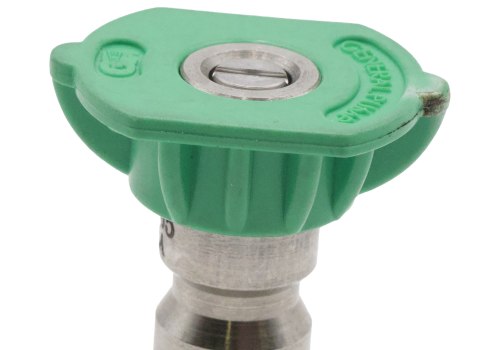
A larger nozzle allows for a higher flow rate in the outlet pipe (or hose). This increases friction along the pipe and causes a pressure drop along the pipe. This increases friction along the length of the pipe and causes a pressure drop along its length. The Bernoulli equation applies only inside and outside the mouthpiece.
Continuity then determines the flow rate in the pipe and that determines the pressure drop along the pipe (there is a formula for that). You can use simultaneous equations or calculation loops. Now that I think about it, the Bernoulli equation also predicts a pressure drop when fluid enters the pipe from the tank. The velocity of air increases with the square root of the diameter of the nozzle, the pressure and the reciprocal of the length of the mouthpiece.
A smaller nozzle is ideal for detailed (but slower) prints, while larger nozzles print faster, but quality is affected, isn't it? Actually, it's a little more complicated. In our article, we will demonstrate the benefits of smaller and larger nozzles in real situations. But first, we need to clarify something that users often get wrong: the correlation between the height of the layer and the diameter of the nozzle. The factors that determine the velocity of the material in the nozzle are the volume and pressure of the available air, the diameter and length of the hose, the size of the nozzle tip, the type of material, and the speed with which it is fired. These factors allow great flexibility and versatility, since large, intermediate or small volumes of material can be shot at low, medium and high speeds according to the immediate needs of the application.
The gunman can make small or large variations in flow rate, water content and speed following the shooter's instructions. Since the stagnation pressure at the nozzle inlet and the pressure at any other station, such as the outlet station, can be easily measured, the equation. Just after passing the throat, the gas pressure is higher than the ambient pressure and it is necessary to reduce it between the throat and the nozzle outlet by expanding. For optimal takeoff performance, the pressure of the gases leaving the nozzle must be at sea level pressure when the rocket is close to sea level (at liftoff).